
Reactive dyes for textile printing
DEVELOPMENT OF THE IMAGINATION
Textile printing is one of the most common techniques for introducing a certain design into a fabric, locally dyeing one or more areas of it. This technology allows reproducing designs that are in the imagination of the designer. There are different methods for textile printing.
The reactive dyes offered by QUIMIGEN S.A.C. They provide high-quality prints to the textile market that remain unchanged over time and after numerous washes.

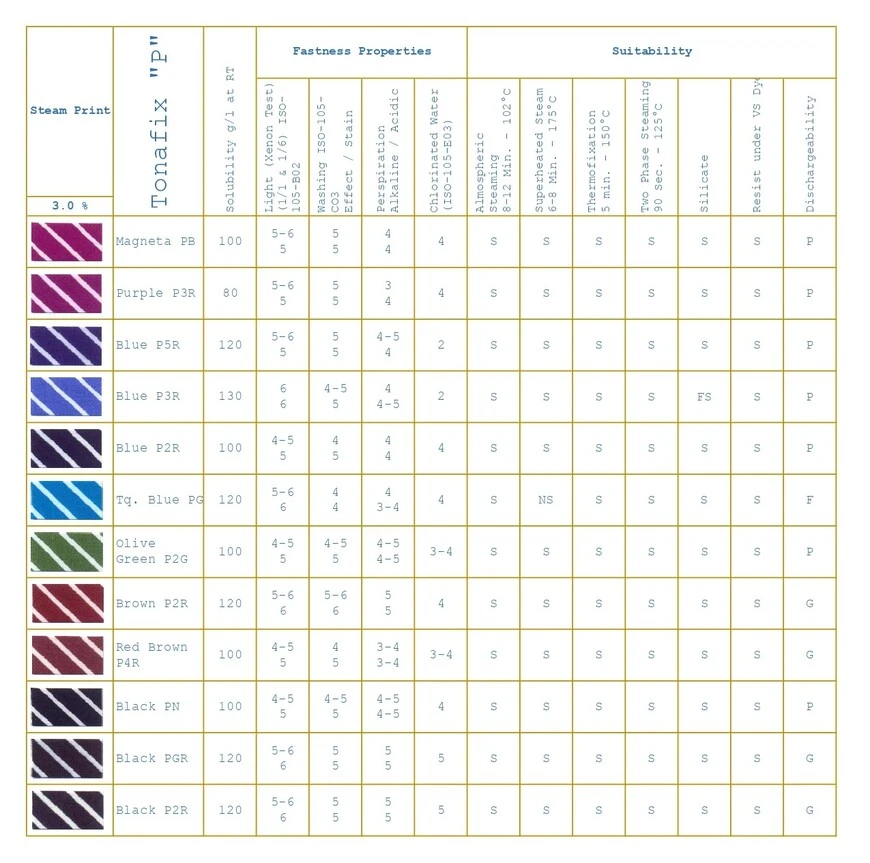
This pattern card illustrates the Tonafix ‘P’ dyes which are suitable for printing of cellulosic fibers.
1. Pretreatment of the goods
To ensure optimum results in reactive printing of woven or knitted fabric all impurities in the fibre, lubricants, auxiliaries and processing chemicals that could react with reactive dyes or adversely affect the printing process must be removed To obtain maximum colour yield brilliancy levelsness and wet fastness properties on cotton, it has been mercerized or treated with a caustic soda solution of at least 22 °Be (16.4%) Regenerated cellulosic fibers should be treated in a tensionless state with a caustic soda solution of approx 6-8 °Be (4-5%) Alkaline pretreatment improves further dimensional stability and facilitates washing-off of the prints
2. Print paste preparation
Most important ingredient is the thickener
Sodium alginate is the ideal thickener for the purpose, which does not react with the dyestuff and can be very easily washed off
Print recipe
A. Stock thickener
Sodium alginate thickener 400-600 Parts
Urea 100-200 Parts
Dycrogol (Resist salt) 10 Parts
KBI Liquid 5 Parts
Sodium Bicarbonate 25-30 Parts
Preservative 0.5-1.0 Parts
Water X Parts
1000 Parts
B. Print paste preparation
Stock thickener X Parts
Tonafix ‘P’ Dyes Y Parts
1000 Parts
3. Fixation
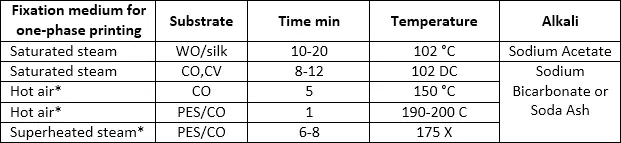
The following fixation methods can be used as per availability of equipment:
4. Two-phase prints
First of all the dried prints are impregnated open-width, crease-free whit an alkaline fixation liquor, and after that fixed as per the available equipment.
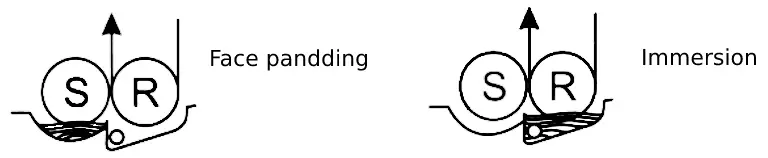
A horizontal padder with a steel/rubber roller arrangement has effective to apply the alkaline fixation liquor, which should allow both face padding and immersion of the fabric, depending on its structure and weight. The padding roller which comes into contact with the printed side of the fabric should be made of steel (S) and the nip roller should be covered with rubber (R)
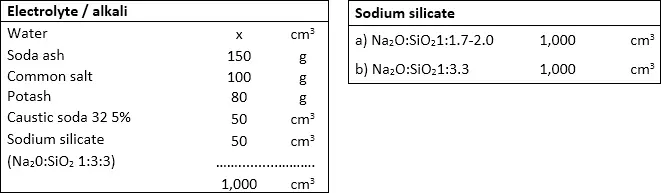
Fixation Liquors:
Fixation medium : superheated steam
Substrate: cotton, viscose
Time: 90 sec
Temperature: 125 °C
5. Washing-off
To obtain a clean white ground, high brilliancy and good fastness properties, carry out a proper washing-off process.
There are two stages for washing-off of prints. One is to remove thickeners, chemicals and unfixed dyes and another one is to maximize fastness properties.
In first stage, to obtain a clean white ground, swell the dry thickening film and remove the swollen thickening, residual alkali, unfixed reactive dye and auxiliaries.
The best results are achieved with a specific water flow, e.g. by spraying the goods with a low liquor level, effective separation of the rinse baths and rapid liquor exchange at 90-95°C. If this is not possible, we recommend starting the washing-off process with cold water.
In two-phase methods, the swollen thickening, alkali, unfixed dye and auxiliary should be removed by spraying intensively at 40°C, preferably without standing liquor.
After this, the goods are washed first at 60-70°C and then at 90-95°C.
The prints should be washed-off in soft water to prevent the formation of sparingly soluble calcium alginate. It is important to washed-off all unfixed and hydrolyzed dye components completely if it´s still present in the woven or knitted fabric.
As basically, this is a diffusion process, the time/temperature relationship is important.
In the washing-off process, not too much trust should be placed in the action of any detergents used for water-soluble dyes.
It is very important to ensure that the baths are close to the boil. As the temperature rises, the substantivity of hydrolyzed dye declines and the rate of diffusion increases. This assists in the removal of the hydrolyzed dye from the fiber.
The information provided here is in good faith, as our current knowledge of the product without liability.
No products were found matching your selection.
